How Much Does Smoke Alarm Compliance Cost in NSW?
Trying to work out what smoke alarm compliance will cost you? A single hardwired photoelectric alarm, supplied and installed, typically runs $150 to $250. A full interconnected system for an average three to four bedroom home sits around $600 to $1,200, depending on wiring access and how many alarms you need. Rental compliance upgrades usually land somewhere in that range too, depending on how many of the existing alarms already meet the standard.
NSW tightened its smoke alarm rules a few years back, and plenty of homeowners and landlords are still catching up. Here’s what the law requires, what it costs to get sorted, and what changes the price.
NSW Smoke Alarm Laws, Explained Simply
Every home in NSW needs photoelectric smoke alarms. Ionisation alarms are on the way out. They’re slower to detect the smouldering fires that make up most house fires, which is why photoelectric is now the standard.
Interconnection is the biggest change for a lot of people. In new builds and properties built after May 2014, alarms need to be wired or linked so that if one goes off, they all do. Landlords carry this compliance obligation, not tenants. Owner-occupiers in older homes have more flexibility on timing, but the photoelectric requirement still applies regardless of when the house was built.
Alarms need to go in every bedroom, in hallways connecting bedrooms to the rest of the house, and on every level of the home. Get the placement wrong and you can end up compliant on paper but with dead spots in practice.
Cost to Install or Upgrade Smoke Alarms
A single hardwired photoelectric alarm, supplied and installed, is generally $150 to $250 per unit. Where hardwiring isn’t practical, a 10-year sealed lithium alarm is a solid alternative at roughly $95 to $130 installed.
For a full-home interconnected system, most three to four bedroom Central Coast homes are looking at $600 to $1,200 all up. Larger homes with five or more alarms, or ones with difficult roof access, sit at the higher end, mainly because of the extra time it takes to run cabling.
Rental compliance upgrades are their own category. If you’re a landlord or property manager, the cost depends on how many of your current alarms already meet the interconnection and photoelectric rules.
A partial upgrade might only need one or two alarms replaced, while a full retrofit falls closer to the whole-home pricing above. Strata properties often need a coordinated approach across multiple units, which is worth planning ahead of any sale or lease renewal.
What Affects the Price
A few things move the number up or down, and it’s worth knowing them before you get a quote so nothing catches you off guard.
Number of alarms. This is the biggest lever. A single-alarm top-up costs a lot less per unit than fitting out a whole house, and most quotes drop in price per alarm once you’re doing three or more in the one visit.
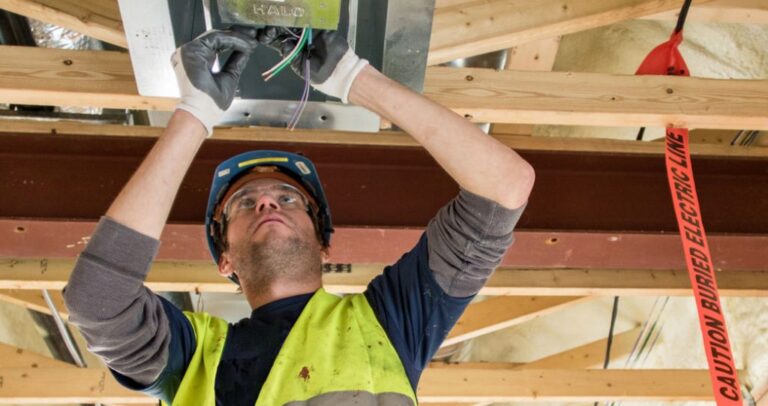
Hardwired vs. 10-year lithium. Hardwired alarms tie into your home’s wiring and need a licensed electrician to run cable, which adds labour time. Sealed 10-year lithium alarms skip the wiring step entirely, so they’re quicker to fit and cost less upfront, though they don’t offer the same battery-free reliability as a hardwired system.
Wired vs. wireless interconnection. Wired interconnection means physically running a cable between every alarm, which is more labour-intensive but generally more reliable long-term. Wireless interconnection uses a radio signal between units instead, which cuts down on cabling time and suits homes where running new wire is difficult or disruptive.
Ceiling access. A single-storey home with an accessible roof cavity is a straightforward job. A two-storey home, a raked ceiling, or an older house with insulation packed tight against the rafters all add time, and that time gets reflected in the quote. If we need to cut access points or work around existing cabling, it’s worth asking about upfront so there are no surprises.
Do You Need to Replace or Just Test?
Not every job is a full replacement. If your alarms are already photoelectric and interconnected, a service and test might be all you need. We check battery health, sensor function, and interconnection response, and flag anything approaching its 10-year replacement date.
It’s worth building this into your regular electrical maintenance rather than waiting for an alarm to start chirping at 2am.
Landlord and Strata Compliance Checklist
If you’re managing a rental or a strata property, non-compliance isn’t just a safety issue, it can also affect insurance claims down the line.
Our strata electrical service covers common areas and individual units, and pairs well with our broader electrical safety inspection if you’re due for one.
Get Your Home or Rental Compliant
Not sure where your property stands? Request a free Electrical Health Report and we’ll check your smoke alarms along with the rest of your switchboard and wiring.